

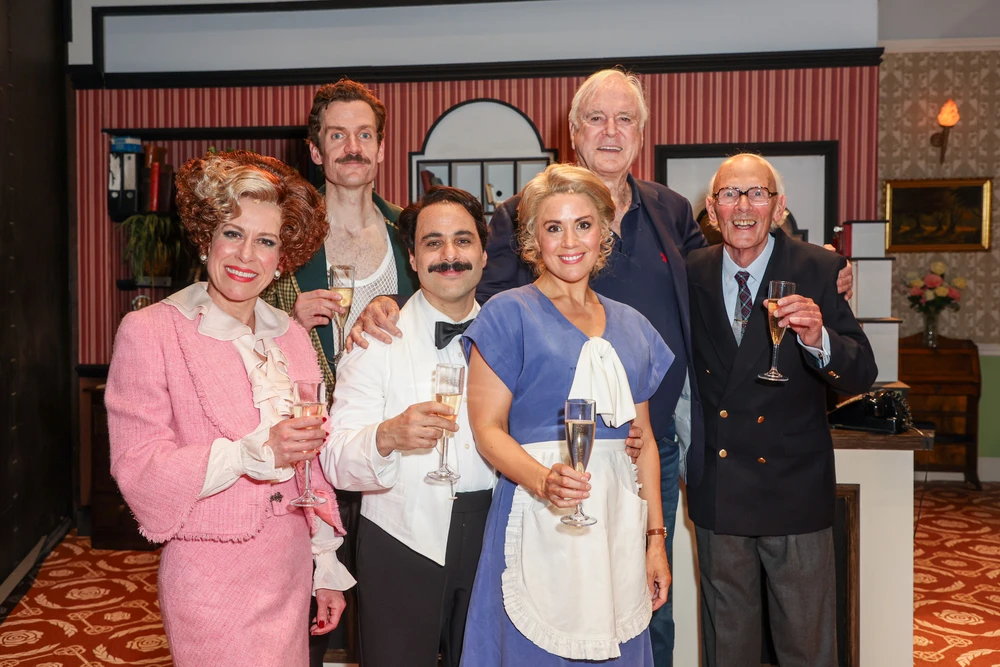
Few British sitcoms have achieved the lasting reputation of Fawlty Towers Play Cast. Although the original television series was famously short, its characters, misunderstandings, and unforgettable one-liners have continued to entertain audiences for decades. That popularity has naturally made the story an appealing choice for live theatre, where audiences can experience the chaos of the Fawlty family and their guests in a completely different way.
When people search for the Fawlty Towers play cast, they are often looking for more than a simple list of actors. They want to know who plays Basil Fawlty, Sybil Fawlty, Manuel, Polly, and the other memorable characters, as well as how the performers approach roles that are already deeply associated with the original television cast.
One important point is that there is not necessarily one permanent cast for every production called Fawlty Towers Play Cast. Theatre productions can have different actors depending on the country, venue, tour, and production year. The stage version has therefore become a fascinating opportunity for performers to interpret familiar characters while putting their own personality into the roles.
Understanding the Fawlty Towers Play Cast Stage Production
The stage version of Fawlty Towers Play Cast is based on the comedy created by John Cleese and Connie Booth. The original sitcom starred John Cleese as Basil Fawlty, Prunella Scales as Sybil Fawlty, Connie Booth as Polly Sherman, and Andrew Sachs as Manuel. Their performances established the personalities that audiences still recognize today.
A theatrical adaptation has to take those familiar characters and make them work in a live environment. That is not as simple as copying scenes from television. On stage, actors have to maintain energy throughout the performance while reacting directly to the rhythm of live comedy. Timing, physical movement, pauses, facial expressions, and audience reactions all become particularly important.
The stage production also gives viewers a chance to see the Fawlty Towers Play Cast world from a slightly different perspective. Instead of watching a carefully edited television episode, the audience is sitting in the same room as the performers. That creates a special atmosphere because every mistake, misunderstanding, and comic reaction happens in real time.
Who Plays Basil Fawlty?
Basil Fawlty Towers Play Cast is easily the most recognizable character in the Fawlty Towers Play Cast universe. Originally played by John Cleese, Basil is the constantly frustrated hotel owner whose attempts to maintain order usually create even more disorder. Any actor taking on the role has a major challenge because Cleese’s performance is so strongly associated with the character.
The actor playing Basil needs to capture his short temper without simply turning the role into an imitation of John Cleese. The best stage performances usually understand what makes Basil funny rather than relying entirely on copying his voice or movements. His arrogance, insecurity, desperation to impress important guests, and inability to control his emotions are the real foundations of the character.
Physical comedy is another major part of Basil’s role. His frantic movements around the hotel, increasingly desperate reactions, and attempts to hide embarrassing situations provide many of the production’s biggest laughs. A successful stage Basil therefore needs excellent comic timing as well as enough energy to carry some of the most demanding scenes.
The Actress Behind Sybil Fawlty Towers Play Cast
Sybil Fawlty Towers Play Cast is arguably just as important to the comedy as Basil. In the original television series, Prunella Scales created a character who could control a chaotic situation with a single look or a sharply delivered line. Sybil is confident, practical, outspoken, and often much more aware of what is happening than her husband.
The actress playing Sybil has to establish a strong relationship with the actor portraying Basil. Their arguments are a central part of the show’s humor, and the chemistry between them can determine the overall rhythm of a production. Sybil is not simply Basil’s wife; she is one of the people who keeps the hotel functioning despite his constant attempts to make everything more complicated.
Another interesting aspect of the character is her confidence. While Basil frequently panics, Sybil often appears to understand exactly what needs to happen. Her ability to remain composed while Basil loses control creates a comic contrast that makes their relationship so entertaining.
Polly and Her Role in the Hotel Chaos
Polly Sherman, originally played by Connie Booth, is another key figure in the Fawlty Towers Play Cast story. Working at the hotel, Polly often finds herself caught between Basil’s schemes, Sybil’s demands, and the unpredictable guests. She is intelligent, capable, and frequently forced to help repair situations that she did not create.
The performer playing Polly needs a slightly different comic style from the actors playing Basil and Sybil. Polly often functions as the practical center of the hotel. Her reactions help the audience understand just how ridiculous the situation has become, while her attempts to keep things under control can create another layer of humor.
One of Polly’s most entertaining qualities is her ability to adapt. She regularly has to deal with unusual requests and increasingly complicated plans. On stage, this provides opportunities for subtle reactions, quick exchanges, and physical comedy that can make the character particularly enjoyable to watch.
Manuel: One of the Most Memorable Characters
Manuel is perhaps the character most immediately associated with the phrase “Fawlty Towers Play Cast” after Basil himself. Originally portrayed by Andrew Sachs, Manuel is a Spanish waiter whose struggles with English become a recurring source of comedy. His famous misunderstandings and attempts to satisfy Basil’s demands are central to many of the stories.
The actor playing Manuel has to balance comedy with the character’s innocence. Manuel is not simply there to be the target of jokes. He is enthusiastic, hardworking, and eager to please, even when he has absolutely no idea what Basil wants from him. That makes his relationship with Basil particularly funny and occasionally sympathetic.
Live theatre can make Manuel’s physical comedy even more effective. His movements, reactions, confusion, and attempts to escape from difficult situations can receive an immediate response from the audience. A performer who understands the character’s sincerity can make Manuel feel like a genuine person rather than a collection of comic misunderstandings.
Other Characters in the Fawlty Towers Play Cast
The supporting characters are essential to creating the strange and unpredictable world of the hotel. Depending on the stage production and adaptation, audiences may encounter several familiar guests and employees from the original stories. These characters provide the situations that push Basil closer and closer to losing his temper.
One of the strengths of Fawlty Towers Play Cast is that even characters with relatively limited stage time can have a major comic impact. A demanding guest, an eccentric visitor, or an employee arriving at exactly the wrong moment can completely change the direction of a scene. Supporting actors therefore need strong timing and a clear understanding of the production’s comic style.
The cast also has to work together as an ensemble. Live comedy depends heavily on communication between performers. A missed cue, poorly timed entrance, or rushed line can affect an entire sequence. When the cast works well together, however, those complicated scenes can become some of the funniest moments of the evening.
Why Casting Matters So Much in Fawlty Towers Play Cast
Casting is particularly important when a production is based on a classic comedy. Audiences arrive with expectations because they already know the characters from television. They may have a specific idea of what Basil, Sybil, Polly, and Manuel should look and sound like.
At the same time, a stage production needs actors who can bring something fresh to those familiar roles. A perfect performance is not necessarily an exact recreation of the original television cast. Instead, it should understand the characters’ personalities and relationships while allowing the performers to create their own interpretation.
This balance between familiarity and originality is one of the reasons different productions can feel surprisingly fresh. Two actors can play Basil differently while still making the audience immediately recognize the character. The same applies to Sybil, Polly, and Manuel.
The Chemistry Between the Main Cast
Comedy often depends on chemistry more than individual performances. In Fawlty Towers Play Cast, the relationships between the characters create most of the situations that audiences enjoy. Basil’s relationship with Sybil, his treatment of Manuel, and his reliance on Polly all contribute to the hotel’s constant turmoil.
The actor playing Basil must therefore respond naturally to everyone around him. If Basil feels disconnected from Sybil or Manuel, the central comedy loses some of its impact. The strongest productions make the characters feel as though they have known one another for years, even when they are completely frustrated with each other.
The same applies to the timing of group scenes. Fawlty Towers Play Cast often works like a carefully constructed comedy machine, with one character entering just as another is trying to hide something. On stage, the cast has to maintain that rhythm without making the performance feel mechanical.
How the Stage Cast Differs From the Original TV Cast
Comparing a modern stage cast with the original television cast can be interesting, but it is important to remember that theatre is a different medium. John Cleese, Prunella Scales, Connie Booth, and Andrew Sachs had the advantage of television production techniques, including editing and multiple takes. Stage performers do not have that luxury.
A theatre actor has to deliver the performance live, night after night. That requires stamina, concentration, and the ability to recover smoothly if something unexpected happens. An audience member may laugh longer than expected, for example, forcing an actor to wait before delivering the next line.
Because of these differences, stage performers often develop their own physical and vocal interpretations. Rather than trying to replace the original cast, they create a new version of the characters. This is part of what makes live adaptations interesting for longtime fans.
What Makes the Fawlty Towers Play Cast So Entertaining?
The enduring appeal of the cast comes from the fact that every character has a clear personality. Basil is impatient and insecure, Sybil is confident and commanding, Polly is capable and observant, and Manuel is enthusiastic but frequently confused. These contrasting personalities naturally create comic conflict.
The performers also need to understand when to exaggerate and when to remain completely serious. Some of the funniest moments in Fawlty Towers Play Cast come from characters treating ridiculous situations as though they are extremely important. That contrast gives the comedy its distinctive style.
Audience interaction adds another dimension. Theatre audiences respond immediately, and performers can sometimes adjust their pacing according to the reaction in the room. A particularly strong laugh can change the timing of the next scene, making each performance slightly different.
Final Thoughts on the Fawlty Towers Play Cast
The Fawlty Towers play cast plays a huge role in keeping this classic comedy alive for modern audiences. While the original television performances remain iconic, stage actors have the difficult but rewarding job of bringing these characters to life in front of a live crowd.
Basil, Sybil, Polly, and Manuel each require a very different performance style. The actor playing Basil needs explosive comic energy, while Sybil requires confidence and sharp timing. Polly needs to provide intelligence and balance, and Manuel depends heavily on physical comedy, innocence, and carefully controlled reactions.
Ultimately, the success of a Fawlty Towers Play Cast stage production comes down to the chemistry between the performers. When the cast understands the characters, respects the original comedy, and adds its own theatrical energy, the result can feel both familiar and fresh. That is why audiences continue to be interested in the cast behind this remarkable British comedy, even decades after the original series first appeared on television.