

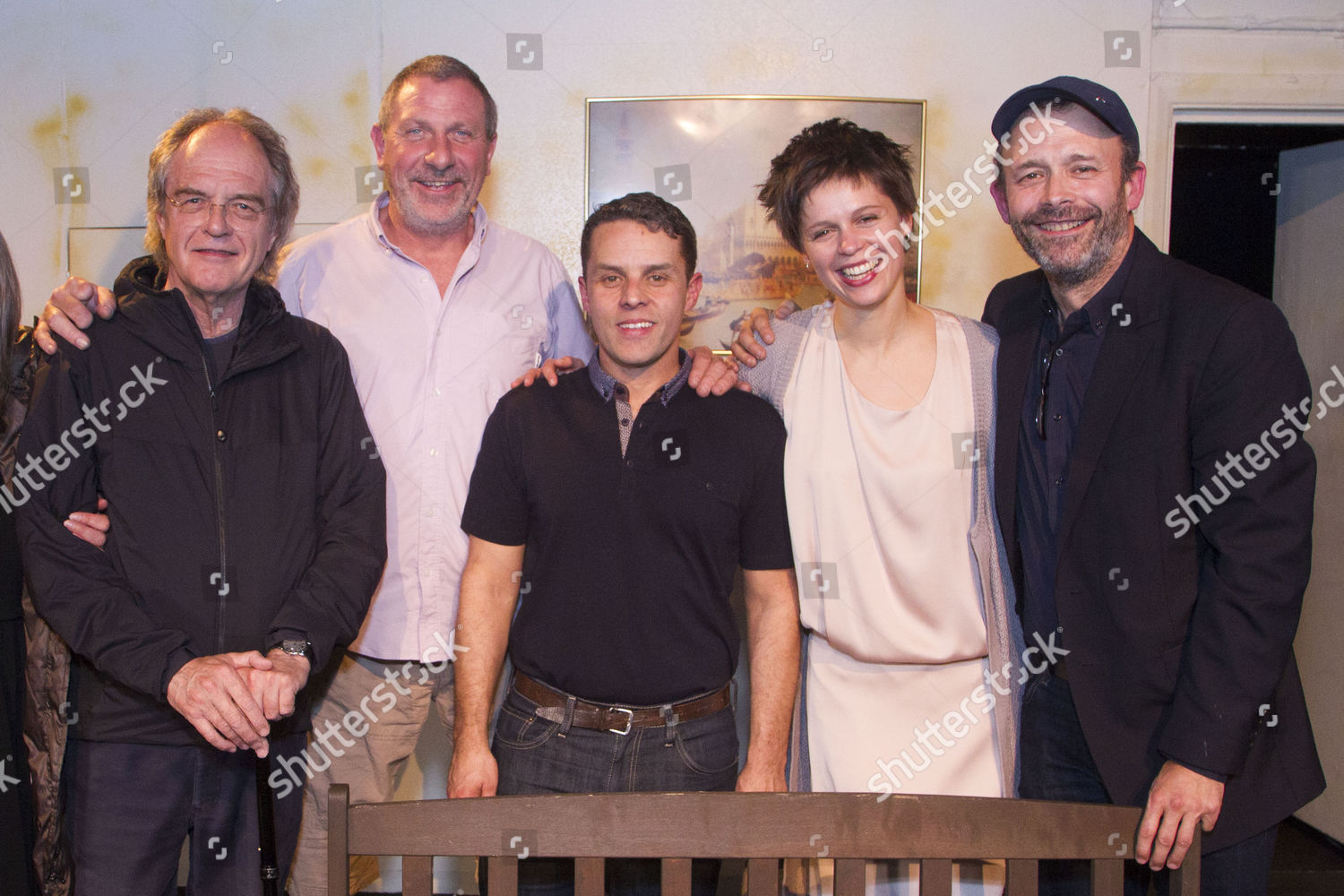
Introduction
Chips Hardy, born Edward John Hardy, is a British writer whose career has stretched across television, theatre, literature, comedy, advertising, and film development. While many people first discover his name because of his connection to actor Tom Hardy, Chips Hardy has built a creative career that stands firmly on its own. His work reflects a distinctive combination of dark humor, unconventional storytelling, sharp observation, and a willingness to explore complicated human behavior.
Hardy was born on January 23, 1950, in London, England. Over the years, he developed experience in several creative industries before becoming particularly recognized for his work as a writer and television creator. His professional background also includes advertising, where he worked as a creative director, giving him a broad understanding of communication, character, and storytelling.
For modern audiences, Chips Hardy is perhaps best known as one of the creators of Taboo, the dark historical drama starring his son Tom Hardy. The series brought together Chips Hardy, Tom Hardy, and Steven Knight and became an important part of Hardy’s later career. However, Taboo represents only one chapter of a much longer creative journey.
Who Is Chips Hardy?
Chips Hardy is an English novelist, playwright, screenwriter, and creative professional. His birth name is Edward John Hardy, but he has long been known professionally as Chips Hardy. His career demonstrates an unusual ability to move between different forms of storytelling without being limited to one particular medium.
Before becoming widely associated with television drama, Hardy developed experience in advertising and creative direction. According to publisher and industry biographies, he worked as an international creative director, building professional experience in an industry where concise communication, memorable concepts, and understanding audiences are extremely important.
That background helps explain why Hardy’s creative work has often crossed traditional boundaries. He has written television material, theatre productions, novels, comedy material, and screen projects. Rather than following a single predictable career path, he has continued to experiment with different storytelling formats.
Early Life and Education

Chips Hardy was born and raised in London. His early education played an important role in developing his interest in literature and creative expression. Available biographical information states that he attended Latymer Upper School after winning a state scholarship and later studied English at Downing College, Cambridge.
Cambridge provided Hardy with an environment where literature, performance, debate, and unconventional ideas could flourish. His university years helped develop the intellectual foundation that would later appear in his writing. He became interested in modern literature and theatrical experimentation, interests that eventually influenced his professional approach.
After university, Hardy briefly explored work connected with BBC drama before moving into advertising. Rather than seeing advertising as a departure from writing, he developed it into another creative discipline. His career in advertising eventually included work as a global creative director, adding another layer to his already diverse professional background.
Chips Hardy’s Career in Writing and Television
One of the most interesting aspects of Chips Hardy’s career is the sheer variety of material he has produced. His writing has not been restricted to one genre or audience. He has contributed to comedy, television drama, children’s programming, theatre, novels, and other forms of entertainment.
Among his earlier television-related work was Helping Henry, a children’s series involving a talking chair. He also worked on About Face, a television drama associated with Maureen Lipman. His comedy writing included work connected with Irish comedian Dave Allen, for which Hardy received a British Comedy Award.
This variety is significant because it shows that Hardy’s career was developing long before Taboo introduced his work to a new generation of viewers. His later success was not the result of a single lucky project. Instead, it grew from decades of writing, creative experimentation, advertising experience, theatre work, and television production.
The Creation of Taboo
The project that transformed Chips Hardy’s profile for many modern viewers was Taboo. The series was created by Chips Hardy, Tom Hardy, and Steven Knight, with Tom Hardy taking the leading role as James Keziah Delaney. Chips Hardy served as a creator, writer, and consulting producer on the project.
The story was developed over a long period. Reports about the project describe its origins as an idea developed by Chips and Tom Hardy before Steven Knight became involved in shaping the television series. The eventual result was a dark historical drama set in London in the early nineteenth century, combining political intrigue, family conflict, commerce, revenge, and mystery.
What made Taboo particularly distinctive was its atmosphere. Instead of presenting historical London as a polished period setting, the series created a dangerous and morally complicated world. James Delaney’s return to London after years abroad becomes the starting point for a much larger struggle involving property, power, international interests, and personal revenge. Chips Hardy’s contribution was central to the project’s original creative vision.
Chips Hardy and Tom Hardy’s Creative Partnership
The professional relationship between Chips Hardy and Tom Hardy is naturally one of the most discussed parts of his story. Tom Hardy is one of Britain’s most recognizable actors, but his father was already an established writer and creative professional before Taboo was made.
Their collaboration on Taboo demonstrates how family relationships can sometimes develop into productive creative partnerships. Instead of simply being a project associated with Tom Hardy’s acting career, Taboo brought together the father’s writing experience and the son’s performance ambitions.
The collaboration also illustrates the importance of developing an idea over time. Taboo was not created overnight. The concept reportedly took years to reach television, showing how a creative project can change and mature through repeated development. The final series combined the ideas of Chips Hardy and Tom Hardy with Steven Knight’s television-writing expertise.
Literary Work and Novels
Although Taboo receives much of the attention surrounding Chips Hardy, his literary work deserves equal consideration. Hardy has written novels that demonstrate his interest in unusual characters, dark humor, observation, and unconventional narrative structures.
His 2007 novel Each Day a Small Victory was presented as a series of frontline-style dispatches from wildlife living in an English country lay-by, with illustrations by Oscar Grillo. The concept itself shows Hardy’s willingness to approach familiar surroundings from an unexpected perspective.
Hardy’s literary work continued with Seaton’s Orchid, published in 2022. Having worked across television and theatre, Hardy’s novels offer another way to understand his creative personality. His writing is often associated with a willingness to look at ordinary situations and find something strange, humorous, uncomfortable, or unexpectedly dramatic within them.
Theatre and Dark Comedy
Theatre has also been an important part of Chips Hardy’s career. His stage work demonstrates another side of his writing because theatre requires a particularly direct relationship between character, dialogue, performance, and audience.
One notable project is Blue on Blue, a darkly comic play that examines difficult subjects and complicated human behavior. The production was first showcased in London in 2007 and was later revived in 2016 at the Tristan Bates Theatre in partnership with BLESMA.
Hardy also wrote There’s Something in the Fridge That Wants to Kill Me!, a one-woman dysfunctional cabaret that was performed at the Edinburgh Festival. Projects like these demonstrate his interest in mixing comedy with darker themes. Rather than treating humor as something separate from serious subjects, Hardy frequently uses humor as a way to examine uncomfortable or complicated situations.
His Writing Style and Creative Approach
A major characteristic of Chips Hardy’s work is his willingness to experiment. He has worked in comedy, drama, theatre, literature, and television, and each medium requires a different approach. Yet his projects often share a fascination with unusual characters and situations.
His background in advertising may also have influenced his ability to communicate ideas efficiently. Advertising requires creative concepts that immediately capture attention, while fiction and drama require deeper character development. Hardy’s career allowed him to work with both forms of storytelling, creating a broad creative toolkit.
Another noticeable element is his comfort with dark humor. Some of his theatre and literary projects explore difficult subjects without abandoning wit. That balance can be difficult to achieve, but it gives his work a distinctive personality. His career suggests that he is less interested in producing predictable stories and more interested in finding unusual ways to make audiences think.
Awards and Professional Recognition
Chips Hardy’s career has received recognition in both comedy and television. His work with Dave Allen earned him a British Comedy Award, while his contribution to Taboo resulted in a Writers’ Guild of Great Britain award for Best Long Form TV Drama in 2018.
These achievements are important because they represent different stages of Hardy’s career. The comedy recognition reflects his earlier work, while the Writers’ Guild award demonstrates his continued relevance as a television writer decades later.
His recognition also reinforces the idea that Chips Hardy should not be viewed solely through his relationship with Tom Hardy. Although the family connection naturally attracts attention, his professional achievements existed independently and span several decades.
Chips Hardy’s Influence on Taboo
The importance of Chips Hardy to Taboo goes beyond simply having his name attached to the credits. As a creator and writer, he helped establish the project’s original concept and its distinctive tone. FX officially identifies him as a creator, consulting producer, and writer of the series.
Taboo itself reflects several themes that fit naturally within Hardy’s wider creative interests: unconventional characters, dark humor, historical conflict, complicated relationships, and people operating outside conventional society. These qualities helped the series stand apart from more traditional period dramas.
His involvement also shows how television projects can benefit from writers who bring experience from multiple creative industries. Hardy’s background in advertising, comedy, theatre, literature, and television gave him a wide perspective that could be applied to the development of a complicated drama.
Chips Hardy’s Legacy
Chips Hardy’s legacy is best understood as that of a multidisciplinary storyteller rather than simply the father of a famous actor. His career covers several decades and includes work in television, literature, theatre, comedy, advertising, and screen development.
His partnership with Tom Hardy certainly introduced his work to a much wider international audience. However, the foundation of his career was established long before Taboo. His novels, stage productions, television writing, and comedy work demonstrate a creative identity that existed independently.
Perhaps the most interesting lesson from Hardy’s career is that creative success does not have to follow a straight line. He moved from literature to broadcasting, advertising, comedy, theatre, and television without abandoning his interest in storytelling. That flexibility allowed him to remain creatively relevant across different periods of the entertainment industry.
Conclusion
Chips Hardy is a fascinating example of a British creative professional whose career extends far beyond a single famous project. Born Edward John Hardy in London in 1950, he developed a diverse career as a writer, novelist, playwright, screenwriter, and advertising creative director. His work includes television, comedy, theatre, and literature, giving him an unusually broad creative portfolio.
For many modern viewers, his name is inseparable from Taboo, the acclaimed drama he co-created with Tom Hardy and Steven Knight. Yet focusing only on Taboo overlooks decades of creative work that came before it. His novels and plays reveal a writer who enjoys unusual perspectives, dark comedy, complex characters, and unconventional storytelling.
Ultimately, Chips Hardy’s story is about creative versatility. Whether working on a television drama, a stage production, a novel, comedy material, or a major advertising campaign, he has consistently explored different ways of telling stories. That willingness to experiment is what makes his career interesting—and it is also why his contribution to modern British storytelling deserves recognition in its own right.