

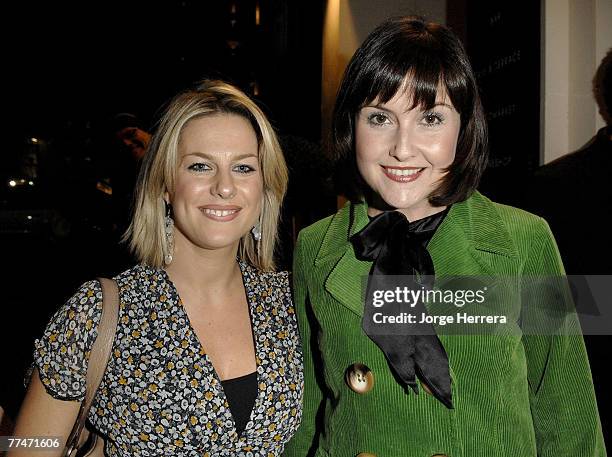
The name Lisa Carling may lead people to different corners of the internet, depending on what they are looking for. Like many names shared by multiple people, it can be connected with different professional backgrounds, personal stories, and online references. That makes it important to approach the subject carefully rather than assuming that every result associated with the name belongs to the same individual.
When people search for a name such as Lisa Carling, they are often looking for a straightforward introduction: Who is she? What is she known for? What does she do professionally? And why has the name attracted attention? Answering those questions requires separating reliable information from assumptions and making sure that unrelated people are not accidentally combined into one biography.
This article takes a practical look at the Lisa Carling name, the importance of identifying the correct person, and the broader reasons why people become interested in individuals who may have a limited public profile. Rather than filling gaps with speculation, the focus is on understanding the available public story and the context surrounding the name.
Who Is Lisa Carling?
Lisa Carling is a name that appears in public and online references, but identifying one definitive biography from the name alone can be difficult. Unlike internationally recognized celebrities whose identities are immediately clear, people with less prominent public profiles may have relatively limited information available about their careers and personal lives.
That distinction matters because internet searches can easily mix together individuals who happen to share the same first and last name. A professional profile, social media page, business reference, or news mention may relate to a completely different Lisa Carling. Readers should therefore consider the source, profession, location, and context before concluding that two references describe the same person.
For anyone researching Lisa Carling, the best starting point is to establish the specific identity being discussed. Once that is clear, information can be evaluated more responsibly. This approach also prevents common online biography mistakes, such as attaching an unrelated career, age, family background, or achievement to the wrong individual.
Why People Search for Lisa Carling

Search interest around a Lisa Carling name can come from many different sources. Sometimes people encounter a name in an article, professional setting, social media post, event, or another public reference and simply want additional background. Other times, a person becomes connected to a more widely known individual or organization, which naturally increases curiosity.
Another reason people search for lesser-known names is the growing importance of professional and digital identities. Today, a person does not necessarily need to be a mainstream celebrity to have an online presence. Entrepreneurs, professionals, artists, consultants, educators, and community figures can all attract attention through their work.
There is also a broader curiosity about the people behind individual stories. When a name appears repeatedly in search results, readers often want a concise explanation rather than dozens of disconnected pages. A well-organized profile can help readers understand what is established, what remains unclear, and which details should not be treated as confirmed facts.
Understanding a Public Profile
A public profile is not necessarily the same thing as a complete biography. Many people have information available about their professional activities while keeping their personal lives private. That is especially common for individuals who work outside entertainment, politics, or other highly public industries.
For this reason, it is useful to distinguish between professional information and personal speculation. A person’s occupation, published work, business involvement, or public appearance may be documented, while details about family relationships, private routines, or personal circumstances may not be publicly established.
This distinction makes online research more reliable. Instead of trying to create a dramatic story from limited information, readers can focus on what can actually be supported. In the case of Lisa Carling, this is particularly important because the name may refer to more than one individual.
Career and Professional Identity
Career information is often one of the easiest ways to distinguish between people with identical or similar names. Professional titles, organizations, industries, publications, and projects provide useful context that helps researchers identify the right person.
If someone is researching Lisa Carling for professional reasons, it is sensible to look beyond the name itself. A person’s career history should ideally be connected with consistent evidence, such as an official organization profile, a professional portfolio, a reputable publication, or another authoritative source.
Career development also tends to be more complicated than a simple list of job titles. People frequently move between industries, take on freelance projects, develop independent businesses, or combine several professional roles. As a result, a person’s public identity can change over time.
The Importance of Reliable Sources
One of the biggest challenges when researching relatively unknown public figures is the quality of online information. Search engines can return social media posts, copied biographies, directories, outdated pages, and user-generated content alongside reliable sources.
A page appearing near the top of search results does not automatically make its information accurate. Researchers should consider who created the page, whether the information is dated, whether claims are supported elsewhere, and whether the source has a reason to be considered authoritative.
This is particularly important for biographical details. Information such as a person’s age, education, relationship status, family members, or net worth is frequently repeated online without strong evidence. Repetition should not be confused with verification.
Lisa Carling and the Problem of Name Confusion
Name confusion is a surprisingly common problem in online research. Two people can have exactly the same name while living in different places and working in completely unrelated fields. Even people with similar names can become incorrectly connected through automated search systems and copied content.
When researching Lisa Carling, contextual clues are therefore essential. Location, profession, employer, associated organizations, and the date of a particular reference can help establish whether two mentions concern the same person.
This is a useful lesson for internet users in general. A search result can provide a starting point, but it should not always be treated as the final answer. Cross-checking several independent sources is one of the simplest ways to avoid building an inaccurate profile.
Public Interest and Personal Privacy
There is a natural tension between public curiosity and personal privacy. People may be interested in learning about someone whose name they have encountered, but that does not mean every detail about that person’s life belongs online.
A responsible profile should concentrate on information that is genuinely relevant and publicly established. Private details should not be presented as fact simply because they appear on an unverified website or social media account.
This becomes even more important when a person is not a major public figure. Someone can have a professional or public presence without choosing to make every part of their life public. Good biographical writing respects that boundary.
What Makes a Person Search-Worthy?
Being search-worthy does not necessarily mean being famous. In today’s digital environment, people can become subjects of online searches because of professional accomplishments, creative projects, business activities, community involvement, or connections to a particular event.
Sometimes a person becomes interesting because readers want to understand the background behind a story. Other times, the curiosity is simply personal: someone has encountered the name and wants to know more.
The internet has also changed how people discover professional identities. A person who once might have been known primarily within a local community can now appear in search results worldwide. That increased visibility can create both opportunities and challenges.
How to Research Lisa Carling More Effectively
Anyone trying to learn more about Lisa Carling should begin by defining the exact context. Ask where the name was encountered, what profession or organization was associated with it, and approximately when the relevant activity took place.
The next step is to compare sources rather than relying on one page. Official websites, established publications, professional profiles, and direct statements are generally more useful than anonymous biography websites or pages that provide no supporting evidence.
Finally, researchers should remain comfortable with uncertainty. If a particular detail cannot be verified, it is better to say that the information is unclear than to present an attractive but unsupported claim. Accuracy is ultimately more valuable than a longer biography.
Why Accurate Biographical Writing Matters
Biographical articles can look simple, but writing them accurately requires careful judgment. A small mistake can change the identity of the person being discussed, particularly when several individuals share a name.
Accuracy also builds reader trust. People are increasingly aware that online content can be copied from one website to another, sometimes carrying the same original mistake across dozens of pages. A responsible article should therefore prioritize verification instead of simply repeating popular search results.
For Lisa Carling, as with any person who does not have an extensively documented public biography, this principle is especially useful. The goal should be to provide meaningful context without inventing information to fill gaps.
The Broader Story Behind Lisa Carling
Ultimately, the story surrounding Lisa Carling illustrates something larger about modern internet research. Names can become searchable very quickly, while reliable background information may remain limited. That creates a situation in which curiosity grows faster than confirmed facts.
A thoughtful approach recognizes this difference. It is possible to discuss why a person attracts attention, how public profiles develop, and what researchers should look for without turning uncertainty into fact.
For readers, that means approaching the name with an open but critical mindset. The most useful information is not necessarily the most sensational information. In many cases, the strongest profile is the one that clearly separates documented facts from assumptions.
Final Thoughts
Lisa Carling is a name that can attract online curiosity, but researching the person behind the name requires more than simply collecting search results. Because names can belong to multiple individuals, context and verification are essential before professional or personal details are connected to a specific person.
The best way to understand a lesser-known public figure is to focus on reliable evidence, relevant professional context, and information that can be reasonably confirmed. This approach produces a clearer and more trustworthy picture while avoiding the common problem of mixing unrelated identities.
As online information continues to expand, careful research becomes increasingly important. Whether someone is searching for Lisa Carling because of professional interest, a recent reference, or simple curiosity, the same rule applies: verify the identity first, evaluate the sources carefully, and avoid treating speculation as fact. That is the foundation of accurate and responsible biographical research.