

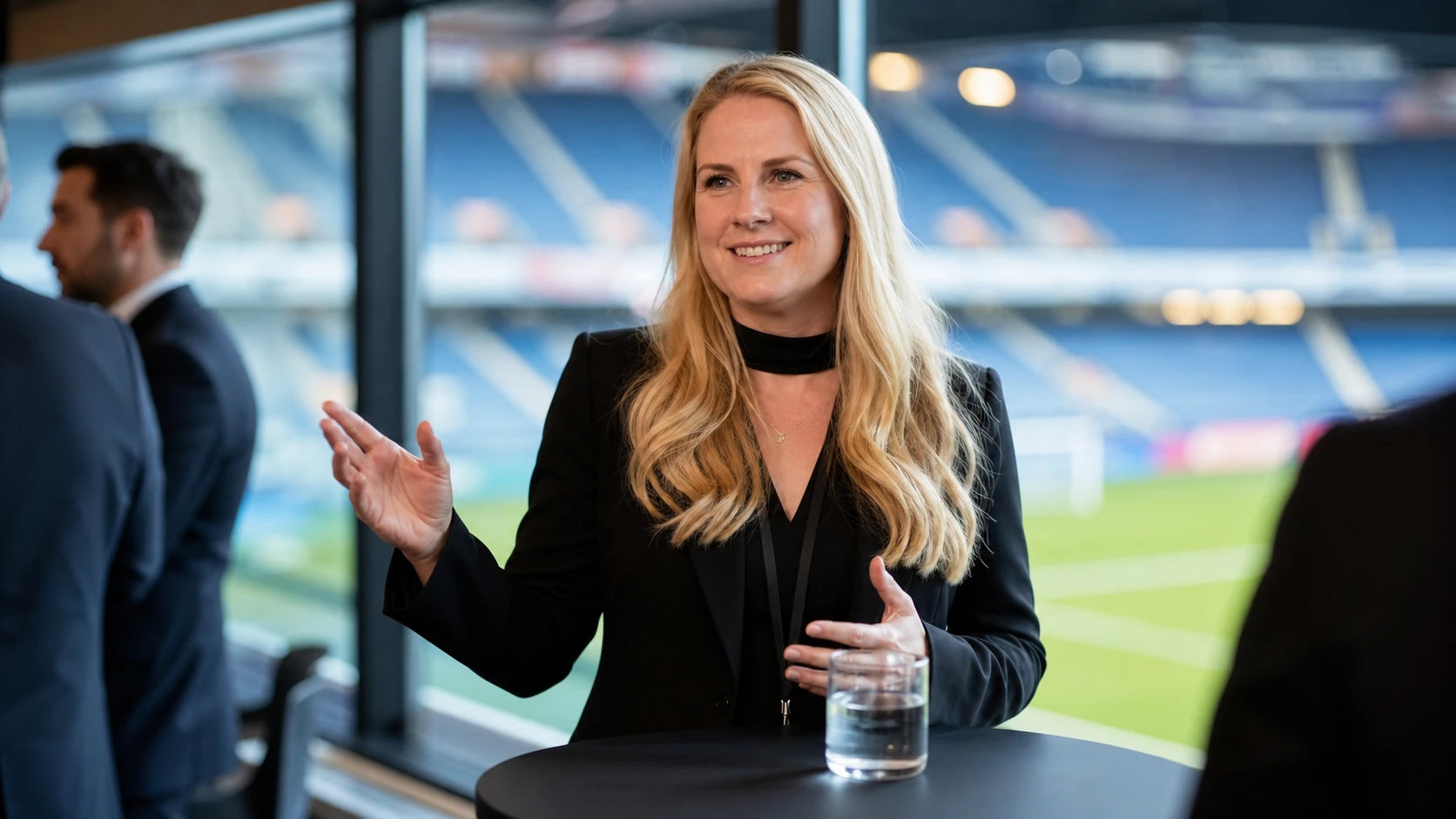
Liesel Jolly is a name that has become increasingly familiar in conversations around women’s football, sports sponsorship, and the business side of modern sport. Unlike the players who attract attention on match days, Liesel Jolly has built her reputation largely behind the scenes, where partnerships, campaigns, athlete programs, and long-term commercial strategies help shape the future of the game.
Her career is particularly interesting because she did not begin as a professional footballer or as a traditional sports celebrity. Instead, she developed her expertise in marketing, sponsorship, leadership, and business before becoming closely involved with women’s football. Her professional profile shows a combination of strategic thinking, commercial experience, and a strong interest in creating better opportunities for female athletes.
As interest in women’s football has grown dramatically, professionals such as Liesel Jolly have become more visible. Her work demonstrates that the development of sport is not only about what happens on the pitch. It is also about building sustainable partnerships, giving athletes greater visibility, creating opportunities after retirement, and convincing major brands that investment in women’s sport can have genuine long-term value.
Who Is Liesel Jolly?
Liesel Jolly is a sports sponsorship and marketing professional associated particularly with women’s football. She has worked with Visa in senior sponsorship and marketing roles and has been closely involved with the company’s women’s football strategy in Europe. The Women’s Football Awards, where Liesel Jolly has served as a judge, describes her as Visa’s Women’s Football Lead in Europe and highlights her role in managing the company’s UEFA women’s football portfolio.
What makes her career stand out is the fact that her influence comes from the commercial side of sport rather than from playing or coaching. She works in an area where business decisions can have a major effect on how competitions are promoted, how athletes are represented, and how fans interact with women’s football. Sponsorship might sound like a purely commercial subject, but successful sports partnerships can influence visibility, funding, storytelling, and opportunities for athletes.
Jolly has also developed a professional reputation for combining commercial objectives with a broader commitment to women’s sport. Her public professional profile describes more than a decade of experience in sponsorship leadership, while her work has included major campaigns and programs connected with female footballers. This combination helps explain why her name has increasingly appeared in discussions about the business and development of women’s football.
Liesel Jolly Professional Journey

One of the most interesting aspects of Liesel Jolly background is that her route into sports marketing was not completely conventional. Publicly available professional information indicates that she originally studied zoology at Anglia Ruskin University and later completed postgraduate work in behavioral ecology. She subsequently developed her business and leadership credentials, including an Executive MBA and senior leadership studies.
That academic background gives her career an unusual dimension. Zoology and behavioral ecology may seem far removed from football sponsorship, but both areas can involve observation, analysis, research, and understanding how people or systems behave. Those skills can be useful in marketing, where professionals need to understand audiences, identify opportunities, interpret information, and make strategic decisions.
Her move into business allowed her to build experience in partnership marketing and event-related work before developing a stronger focus on sports sponsorship. According to published professional profiles, she joined Visa in 2011 and initially worked in partnership marketing, including work connected with the London 2012 Olympic Games. Over time, her responsibilities expanded, eventually leading her toward a dedicated role in women’s football.
This progression is worth noting because it shows that careers in sports do not necessarily require an athletic background. The modern sports industry needs marketers, commercial strategists, event specialists, sponsorship managers, media professionals, analysts, and many other experts. Liesel Jolly career is a good example of how transferable business skills can eventually lead to a meaningful role within professional sport.
Her Role in Women’s Football
Liesel Jolly connection with women’s football became especially significant through Visa’s sponsorship activity. The company became a major supporter of UEFA women’s football, and Liesel Jolly has played an important role in managing and activating that relationship. The Women’s Football Awards specifically credits her with an integral role in Visa becoming the first major brand to partner with UEFA Women’s Football.
Sponsorship in women’s football has changed considerably over the last several years. In the past, the women’s game often received less commercial attention than the men’s game, even when athletes and teams were producing high-quality competition. Major corporate partnerships can help change that equation by bringing additional investment, marketing expertise, global visibility, and commercial credibility to competitions and players.
Jolly’s work is therefore about more than placing a company logo beside a football tournament. Strong sponsorship requires a clear strategy for how the partnership benefits the brand, the sport, the athletes, and the audience. Her professional activity has included athlete campaigns, tournament activations, and initiatives designed to give women footballers greater exposure. Her LinkedIn activity also shows her involvement in campaigns supporting female players and encouraging more positive engagement with women’s football.
The Second Half and Supporting Female Footballers
One of the most notable projects associated with Liesel Jolly is The Second Half, a career-development initiative created to help professional female footballers prepare for life after playing. The program was co-created by Liesel Jolly in 2020 and focuses on the transition that athletes face when they eventually leave professional sport.
For professional athletes, retirement can be a surprisingly difficult transition. Players spend years building their identity around training, competition, travel, teammates, and performance. When that routine ends, they may suddenly need to develop a completely different professional identity. The skills they have gained through sport can be valuable, but athletes may still need guidance on how to transfer those skills into another career.
The Second Half addresses that challenge by focusing on career development rather than simply celebrating athletes for what they achieved on the pitch. Programs like this can provide players with exposure to new industries, professional networks, mentoring, and practical career knowledge. That approach is important because supporting women in sport should not end when their playing careers do.
Jolly’s involvement in the program also reflects a broader philosophy visible throughout her work: women’s football should create opportunities that extend beyond match results. A successful sporting ecosystem should help athletes build sustainable futures, develop professional confidence, and understand the possibilities available to them after retirement.
Liesel Jolly and Karen Carney: Separating Facts From Online Speculation
People searching for Liesel Jolly online may also encounter her name alongside former England international Karen Carney. This has generated considerable curiosity because the two have worked together professionally, particularly around The Second Half initiative. However, online speculation about private relationships should not be confused with verified information.
What is clearly documented is their professional connection. Liesel Jolly has publicly praised Carney’s work, while Carney has also publicly supported Liesel Jolly professional achievements. Their collaboration around women’s football development is well documented, particularly through initiatives connected with Visa and The Second Half.
There are websites that make stronger claims about their private lives, but those claims are not consistently supported by reliable primary sources. Because Liesel Jolly is primarily known as a sports marketing professional rather than a celebrity who regularly discusses her personal life, it is more responsible to focus on the career information that can actually be verified.
This distinction matters in the age of search-driven content. A person can become associated with a particular search phrase simply because websites repeatedly connect two names. Repetition does not automatically turn speculation into fact. In Jolly’s case, her professional achievements in women’s football provide a much more substantial and interesting story than unverified discussion about her private life.
Liesel Jolly Approach to Women’s Football
One of the clearest themes in Jolly’s public professional comments is her belief that women’s football has both social and commercial importance. In a LinkedIn post discussing the growth of the women’s game, she reflected on how attitudes toward women’s football had changed and pointed to the increasing commercial value of the sport.
That perspective is significant because the commercial development of women’s football has often been framed as a question of investment. But investment usually follows evidence of audience interest, brand value, strong competitions, and sustainable opportunities. Professionals working in sponsorship have to build the bridge between those elements.
Liesel Jolly work appears to approach sponsorship as a long-term partnership rather than a simple advertising transaction. A successful partnership needs storytelling, athlete participation, fan engagement, measurable results, and a genuine understanding of the sport. When those elements come together, sponsorship can help create a cycle in which greater visibility attracts more fans, greater interest attracts more commercial partners, and additional investment creates better opportunities.
Her career also illustrates why representation behind the scenes matters. Women’s football needs talented players, but it also needs executives and commercial leaders who understand the specific challenges and opportunities facing the women’s game. Building that infrastructure can be just as important as producing a successful campaign.
Recognition and Professional Achievements
Liesel Jolly work has received recognition within the football business community. In 2025, she publicly shared that she had won the Corporate Football Trailblazer award at the Global Football Industry Awards. In discussing the achievement, she credited the wider team around her and emphasized that corporate football work is a team effort.
That response says something useful about her leadership style. Rather than presenting success as an individual achievement, she highlighted colleagues and collaborators who contributed to the work. In large sponsorship programs, this is particularly relevant because major campaigns involve many moving parts, from brand teams and athletes to rights holders, agencies, media partners, and event organizers.
Her professional recognition also reflects the changing perception of women’s football within the wider sports industry. As the women’s game has grown, the people responsible for its commercial development have increasingly become part of the conversation. Jolly represents this newer generation of sports-business professionals whose work is helping turn women’s football into a more established commercial sector.
The recognition is also notable because Jolly’s own comments suggest that her relationship with football developed relatively recently compared with people who grew up inside the sport. She has spoken about beginning her dedicated work in women’s football around 2018 despite not having a deep football background at the time. That makes her subsequent impact particularly interesting.
Why Liesel Jolly Career Matters
The story of Liesel Jolly is ultimately bigger than one person’s job title. It reflects the transformation taking place across women’s football. As the sport becomes more commercially attractive, specialists are needed to build partnerships that deliver genuine value while helping the game grow sustainably.
Her career also challenges the idea that influence in sport belongs only to athletes, coaches, and broadcasters. Modern football is an enormous industry involving sponsorship, media, technology, events, marketing, communications, finance, and community development. People working in those areas can have a major effect on how a sport develops.
Jolly’s focus on women’s football is particularly relevant because commercial growth can help address some of the historic inequalities in the sport. More sponsorship can mean stronger campaigns, greater exposure, improved resources, and additional opportunities for players. Of course, money alone does not solve every problem, but responsible investment can provide the foundation for meaningful progress.
Perhaps the most interesting lesson from her career is that expertise can be built across different fields. Her academic background was initially connected to science, while her professional career developed through marketing and sponsorship. Eventually, those experiences came together in a role connected with one of the fastest-growing areas of global sport.
What We Can Learn From Liesel Jolly’s Journey
Liesel Jolly’s professional journey offers a useful reminder that careers do not always follow a straight line. A person can begin in one academic discipline, move into business, develop specialist expertise, and eventually find themselves leading projects in an entirely different industry. Flexibility and willingness to learn can be just as important as having a fixed career plan.
Another lesson is the importance of understanding the business side of passion. Jolly’s work shows that supporting a cause does not necessarily mean ignoring commercial realities. In fact, successful partnerships often happen when purpose and business objectives are aligned. Women’s football can benefit from that balance because sustainable growth requires both genuine commitment and sound commercial strategy.
Her work also highlights the value of creating opportunities for the next stage of an athlete’s life. The Second Half is particularly relevant because it recognizes that professional athletes are people with careers that extend beyond their playing days. Helping players prepare for that transition can make the sports industry more responsible and supportive.
Finally, Jolly’s story demonstrates the importance of the people who work behind the scenes. Fans may remember goals, trophies, and dramatic matches, but the growth of a sport depends on countless professionals whose work is less visible. Sponsorship leaders, marketers, event organizers, and program creators help build the environment in which athletes can succeed.
Final Thoughts on Liesel Jolly
Liesel Jolly has developed a distinctive position within the modern sports industry through her work in sponsorship marketing and women’s football. Her journey from an academic background in zoology and behavioral ecology to senior sports marketing leadership is an example of how adaptable skills and continuous professional development can open unexpected doors.
Her involvement with Visa’s women’s football strategy and The Second Half has given her career a wider purpose. Instead of concentrating solely on commercial visibility, her work has also included initiatives aimed at supporting female footballers and strengthening the long-term ecosystem around the sport.
As women’s football continues to attract larger audiences, stronger sponsorships, and increasing international attention, professionals like Jolly are likely to remain important. Her story is a reminder that sporting progress does not happen only during the ninety minutes of a match. It also happens in offices, boardrooms, marketing meetings, athlete programs, and partnerships that quietly build the future.
For anyone searching for information about Liesel Jolly, the most meaningful part of her story is therefore her professional contribution. She represents the growing importance of strategic leadership in women’s football and shows how commercial expertise can be used to create opportunities, strengthen visibility, and support the next generation of female athletes.